
The Case for an AI-Native Strategy
Think big!... well, now think even bigger!... When it comes to applying AI into media workflows and entertainment user experiences, thinking with the constraints of the past will not allow us to harness the full potential of AI. The question is: Are we using AI to simply patch the cracks in our legacy systems, or are we ready to use it to fundamentally reimagine the media consumption and user relationship?
The data suggests that a reimagining is not just an opportunity; it is a necessity. Despite our best efforts with current recommendation engines, the average viewer still spends 10.5 minutes per session searching for something to watch [1]. More concerning is that 20% of these users abandon the application entirely after this search fails [1]. This friction is a primary driver behind the 42% of U.S. subscribers who now identify as serial churners [1].
This isn't a failure of content; it's a failure of connection. The opportunity before us is to move beyond the idea of "fixing" the search bar and instead ask: Can we make content discovery feel less like a task and more like a natural occurrence?
Beyond the Echo Chamber: Engineering Serendipity
The fundamental challenge is the Paradox of Choice. The sheer, unprecedented volume of content distributed across a fragmented ecosystem has induced decision fatigue in the consumer [1]. The user is overwhelmed by options, making the act of choosing a high-effort, high-risk cognitive burden.
The current generation of recommendation algorithms excels at one thing: safety. They often rely on "surface-level data"—titles, genres, and static synopses—to serve more of the same [2]. But viewers don't look for formats; they look for moments. They are searching for "that scene where the underdog wins" or "the specific goals from when Lionel Messi dribbles 4 opponents," not just the full program container.
By leveraging Deep Content Understanding (DCU), we can unlock a new layer of value. Technologies like Media Distillery’s Topic Distillery and Azure AI Video Analyzer allow us to index content at the granular level—tagging topics, faces, and events in real-time [3]. Crucially, this real-time analysis extends beyond simple facts to include emotional and tonal metadata such as speaker sentiment and the emotional charge of the scene, allowing for richer, psychological segmentation. When we understand the inside of the video, we stop pushing "files" and start serving specific, relevant experiences that the user didn't even know they wanted.
This AI-native focus on granular content analysis opens up an immense opportunity: the capacity to move beyond static descriptor-based discovery and naturally guide the user on a discovery journey based on emotions, themes, and desired states.
The Fluidity Concept: When the App Dissolves
If we embrace this AI-native mentality, we must also challenge the dominance of the siloed application. The "Think Big" challenge asks us: What if the interface itself became fluid?
Content Fluidity is the shift from "App-Centric" discovery to "Content-Centric" discovery. This radical shift is being powered by the hyperscale cloud providers—Azure OpenAI, Google Cloud (Gemini), and AWS (Bedrock)—who are supplying the core generative AI models and compute that enable platform-agnostic, cross-ecosystem functionality [14].
In this model, the application layer recedes, and the content surfaces to the viewer exactly when needed. We are seeing early signs of this future:
-
The OS as the Aggregator: The industry is moving toward aggregators that unify content. Solutions like NAGRA’s OpenTV ENTera are enabling this by providing a unified, data-driven platform that simplifies the ecosystem for operators, allowing them to super-aggregate content rather than manage disjointed apps [4].
-
Conversational Fluidity: Platforms are breaking the keyword barrier with Generative AI. Innovators like Tubi have deployed LLM-powered interfaces (Rabbit AI) to allow users to search via natural conversation, dissolving rigid filtering menus [5].
-
Contextual Fluidity: New tools are enabling fluidity across languages. Video.taxi, for instance, uses AI to provide live translation and captioning for 29 languages, ensuring content travels freely across borders without the friction of manual localization [5].
The goal is to create an ambient experience where content finds the user, rather than the user hunting for the content.
The Enablers: Building the AI-Native Tech Stack
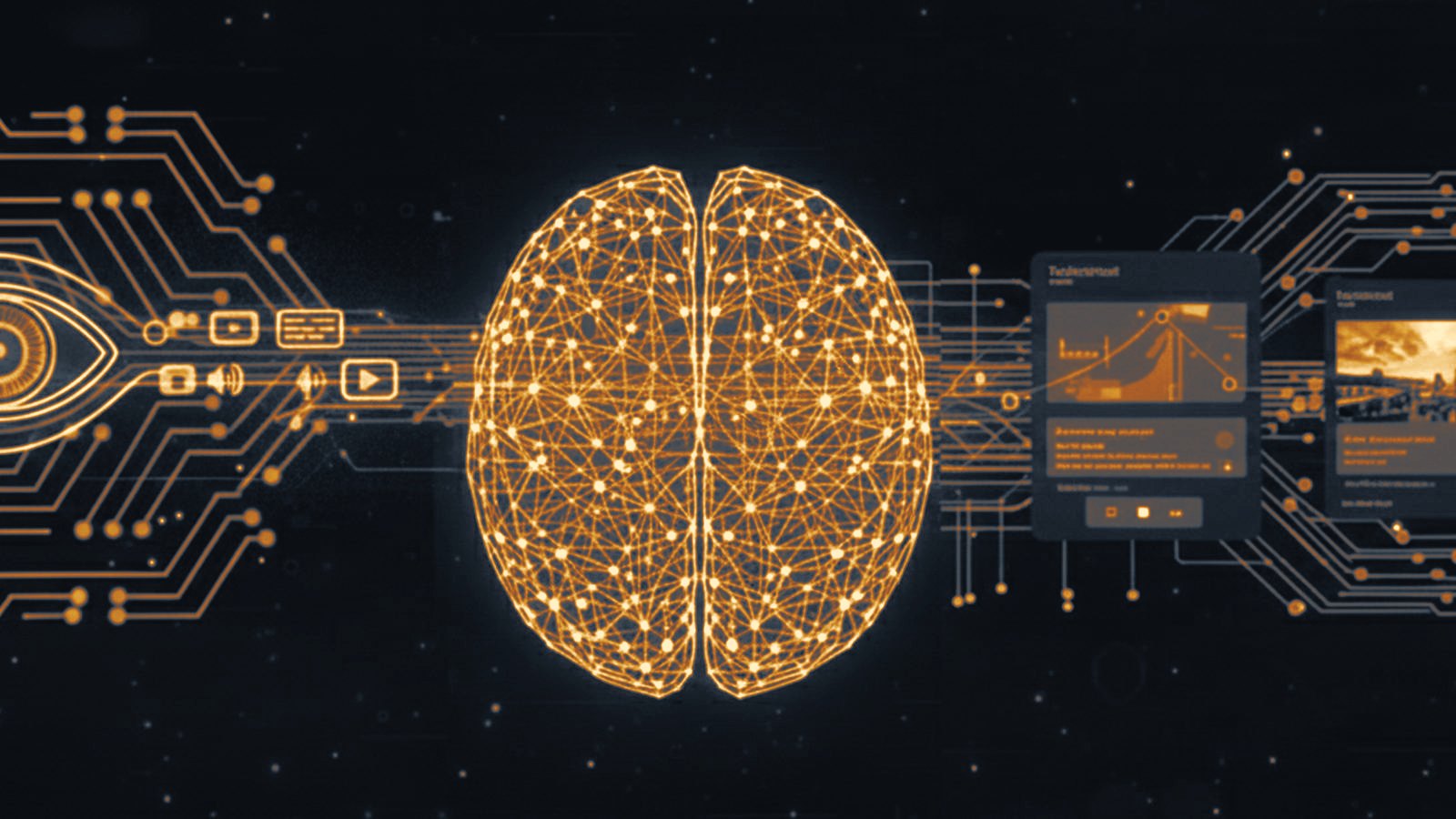
Transitioning to this model requires a new tech stack. Fortunately, an ecosystem of AI specialists is providing the tools to bridge this gap. We can visualize this stack as the Eyes, the Brain, and the Face of the discovery engine.
1. The Eyes: Deep Content Understanding (Vectorization)
The "Eyes" of the stack are the technologies that "watch" the video so the metadata team doesn't have to.
-
The Tech: This layer operates by deploying multimodal AI models to analyze video frames, speech, and sound simultaneously. The core output is vector embeddings—numerical representations of every moment in the content, allowing for similarity-based search across vast archives. This process bypasses the limitations of manual editorial logging, especially for unscripted and long-tail content, providing segment-level accuracy essential for maximizing ROI [1].
-
The Players: Media Distillery leads in extracting specific chapters and topics from linear and VOD content [3]. Twelve Labs provides the developer foundation with a Video Understanding API [6]. Imaginario.ai uses multimodal AI to curate and search within video assets [7].
2. The Brain: Intent & Agency (RAG)
Once the content is understood, the "Brain" must understand the user. This layer replaces simple keyword matching with intent prediction using Retrieval-Augmented Generation (RAG) and Semantic Search.
-
The Tech: The Brain utilizes Large Language Models (LLMs) to interpret natural language queries, translating vague or complex requests into search actions. LLMs from providers like Google (Gemini), OpenAI (via Azure OpenAI), and models accessed through AWS Bedrock are the foundation for the RAG architecture [14]. This system grounds the LLM’s generative capabilities in the real-time content embeddings provided by the "Eyes" layer, ensuring highly accurate, context-aware results, which can deliver up to a 20% increase in pageviews [8].
-
The Players: ThinkAnalytics is a key player here, leveraging deep metadata to power personalized experiences [9]. Recombee is also evolving this layer with personalized semantic search and real-time feeds [10]. Prime Focus Technologies (PFT) leverages GenAI tagging to power RAG-based conversational search capabilities [5].
3. The Face: Generative UX (Dynamic Presentation)
Finally, the "Face" is how this intelligence is presented. In a fluid world, a static grid of thumbnails is insufficient.
-
The Tech: This layer utilizes UX Automation and Machine Learning to drive dynamic content placement and asset generation. The goal is to optimize the final mile of discovery by ensuring the presented assets—whether an image or a video clip—maximize the click-through rate. For instance, ML models automatically create vertical video clips by analyzing widescreen content and intelligently cropping to preserve the core action, a necessary feature given that vertical formats drive significantly higher completion rates on mobile [11].
-
The Players: ContentWise is pioneering the UX Engine, which powers advanced recommendations and personalized UX for major platforms [12]. Accedo specializes in the strategy and integration of these experiences, helping platforms orchestrate partner technologies [13]. NAGRA, through its integrated OpenTV ENTera solution, provides a unified platform for AI-driven personalization and UI [4].
The Opportunity: A New Paradigm for Retention
The challenge from the AI community is clear: Stop using technology to optimize the old way of doing things.
If we apply an AI-native mindset, we can solve the paradox of choice that plagues our subscribers. We can move from a model of "Search and Rescue" to one of "Anticipate and Delight."
The business case for this transition is not just theoretical; it is quantifiable.
-
Retention: In the European market alone, a mere 1% reduction in churn could save the industry $315 million USD annually [1].
-
Engagement: Platforms that have successfully deployed these AI-driven discovery tools report a 60% increase in viewing time per subscriber [1].
This transition will not happen overnight. It requires a strategic commitment to better data (The Eyes), smarter agents (The Brain), and more adaptive interfaces (The Face). However, the complexity inherent in integrating three specialized solution sets creates a powerful drag on innovation. This fragmentation must be addressed.
The ultimate mandate is to champion an industry-wide AI Discovery Interoperability Framework. This is not just a technical challenge, but a leadership one. Executives must drive standardization around the key APIs and SDKs that allow the best-in-class "Eyes," "Brain," and "Face" solutions to collaborate seamlessly. This commitment to shared standards is the final necessary step to accelerate adoption, overcome integration friction, and realize the prize—a stabilized subscriber base and a truly modernized user experience—that is well within reach for those willing to accept the opportunity.
References
-
Media Distillery, "The New Playbook For Content Discovery / Decision Fatigue E-Guide." (Uploaded Source)
-
Gracenote, "Content Discovery and Contextual Ad Opportunities," gracenote.com
-
Media Distillery, "Solutions: Topic Distillery & Deep Content Understanding," mediadistillery.com
-
NAGRA, "OpenTV ENTera Fact Sheet," nagra.vision
-
AI Content Discovery Validation, "Tubi Rabbit AI & Video.taxi, Prime Focus Technologies," (Uploaded Source)
-
Twelve Labs, "Twelve Labs and Frame.io Integration," twelvelabs.io
-
Imaginario.ai, "AI Curated Video Search," imaginario.ai
-
Milvus, "Impact of Semantic Search on User Engagement," milvus.io
-
ThinkAnalytics, "AWS Marketplace Profile," aws.amazon.com
-
Recombee, "Search and Discovery Features," recombee.com
-
OTT Clouds, "Vertical Streaming App Benefits," ottclouds.com
-
Broadband TV News, "ContentWise powers ITVX advanced recommendations," broadbandtvnews.com
-
Accedo, "UX Design Experts," accedo.tv
-
TML Research Note, "Role of Hyperscale Cloud Providers in LLMs and RAG Architectures." (New Citation)